
Dhammapala Jataka
Dhammapala Jataka
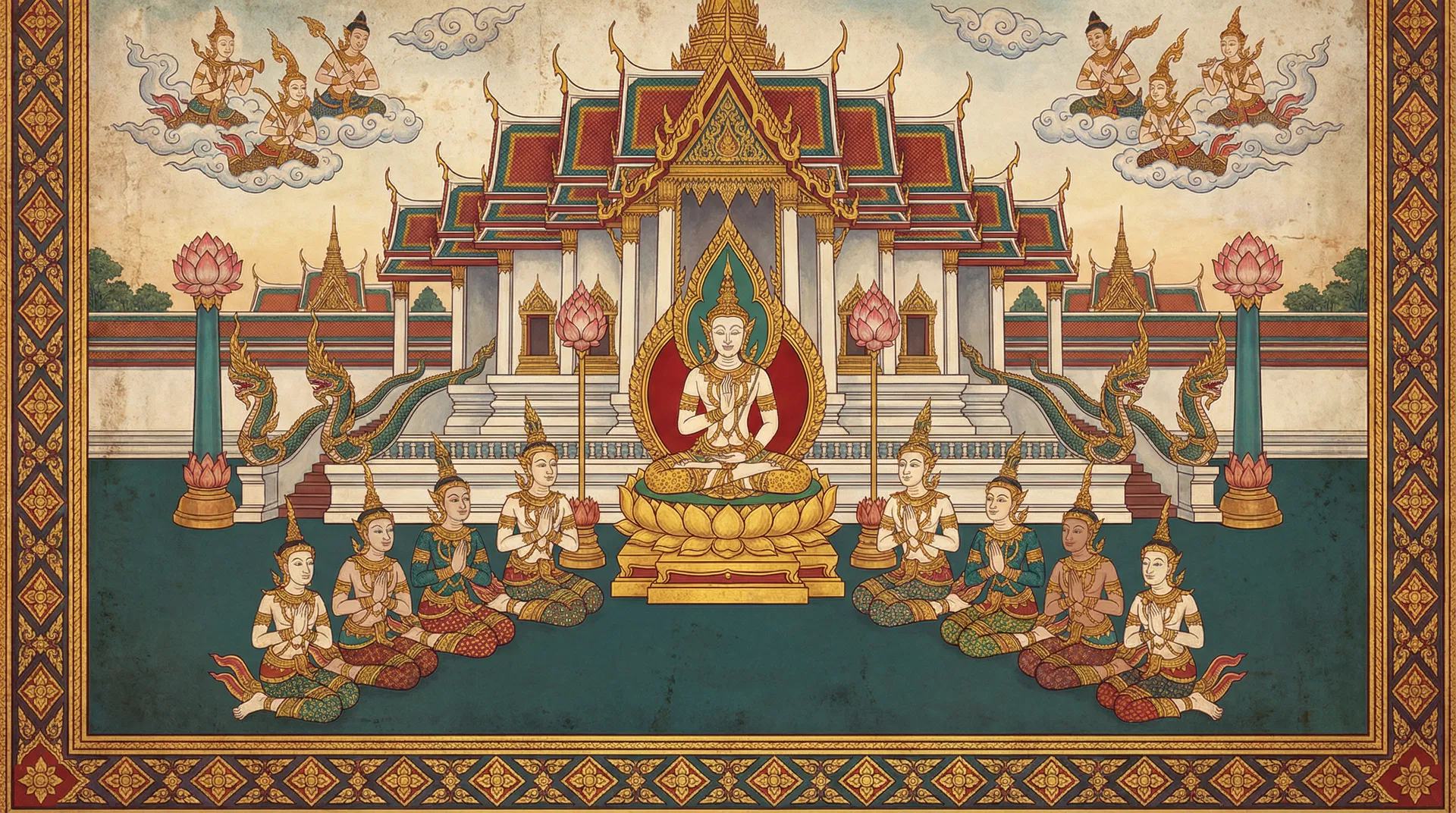
In the ancient kingdom of Kosala, there lived a Bodhisattva who was destined to become the Buddha. In that lifetime, he was born as Prince Bodhisattva, the son of King Suppabuddha and Queen Maya. The kingdom was prosperous, and Prince Bodhisattva grew up surrounded by love and luxury. He was known for his sharp intellect, his compassionate heart, and his unwavering sense of justice.
Meanwhile, in a nearby forest, lived a wicked and power-hungry Brahmin named Dhamma. Dhamma was consumed by envy and resentment towards the royal family, particularly Prince Bodhisattva. He believed that the kingdom rightfully belonged to him and plotted to usurp the throne. He was a master of dark arts and deception, and he used his knowledge to sow discord and manipulate people.
One day, Dhamma approached King Suppabuddha with a cunning plan. He pretended to be a loyal advisor, offering his services to the king. He filled the king's ears with whispers of suspicion and distrust towards Prince Bodhisattva, fabricating stories of the prince's alleged disloyalty and ambition. The king, blinded by Dhamma's deceitful words, began to harbor doubts about his own son.
Dhamma's machinations did not stop there. He also spread rumors among the populace, portraying Prince Bodhisattva as a cruel and selfish ruler in the making. He used his magical abilities to create illusions and spread fear, making the people believe that the prince was a threat to their well-being.
As the days went by, the king's suspicion grew, and the people's fear intensified. Prince Bodhisattva, sensing the shift in atmosphere and the growing animosity towards him, was deeply saddened. He knew that he had done nothing to deserve such treatment, and he could not understand why his own father and his subjects had turned against him.
One evening, Prince Bodhisattva, accompanied by his loyal attendant, decided to investigate the source of this animosity. They disguised themselves and ventured out into the kingdom, listening to the whispers and conversations of the people. To his horror, Prince Bodhisattva overheard his own name being spoken with fear and hatred, accompanied by tales of his supposed cruelty and ill intentions.
He also managed to overhear Dhamma speaking to his followers, boasting about his scheme to seize the throne by manipulating the king and the people. Prince Bodhisattva realized that he was the victim of a malicious plot orchestrated by the wicked Brahmin.
Filled with a profound sense of justice and a desire to expose the truth, Prince Bodhisattva knew he had to act. He could not allow Dhamma's deceit to prevail and harm his kingdom. He decided to confront Dhamma, not with anger or violence, but with the unwavering power of truth and righteousness.
The next day, Prince Bodhisattva appeared before his father, the king, and the assembled court. He calmly recounted the events, revealing Dhamma's treacherous plot and his use of dark magic and deception. He presented irrefutable evidence, including the testimony of those who had witnessed Dhamma's boasts and machinations.
The king, hearing the truth from his own son and seeing the undeniable proof, was filled with remorse. He realized how he had been misled by Dhamma's lies. The people, too, were shocked and outraged by Dhamma's treachery.
Dhamma, cornered and exposed, attempted to use his magic to escape or to create further chaos. However, the sheer force of Prince Bodhisattva's virtuous presence and the collective will of the people for justice rendered his dark arts powerless. Dhamma was apprehended and banished from the kingdom, his power to deceive and harm broken.
King Suppabuddha, deeply ashamed, apologized to his son and reaffirmed his trust and love. The kingdom rejoiced, the truth had triumphed over deception, and the benevolent reign of Prince Bodhisattva was assured. The Bodhisattva, having successfully navigated this treacherous situation with integrity and wisdom, continued to uphold justice and compassion, setting a noble example for all.
— In-Article Ad —
💡Moral of the Story
Deception and malice can be overcome by truth, integrity, and unwavering virtue. Those who seek to harm others through falsehood will ultimately be exposed and defeated.
Perfection: Truthfulness (Sacca)
— Ad Space (728x90) —
More Jataka Tales You May Enjoy
 431Navakanipāta
Kacchapa Jataka
Kacchapa JatakaIn the heart of a lush forest, where ancient trees whispered secrets to the wind and ...
💡 True leadership involves wisdom, foresight, and the willingness to make difficult choices for the well-being of others. Sometimes, a daring act of deception, when motivated by compassion, can save lives.
 1Ekanipāta
The Tale of the Great Lotus
The Tale of the Great Lotus In a time long past, when the world was a canvas of verdant forests and...
💡 Impatience is like a fire that burns everything, but wisdom and concentration are the tools that allow us to control situations and achieve goals with stability.
59EkanipātaThe Tale of the Kassapa City Maiden
In the prosperous realm of Kosala, in days long past, there lay a small city named Kassapa. This cit...
💡 True intentions are often revealed through actions, not words. Observe closely, for the subtlest signs can uncover the deepest truths.
 158Dukanipāta
Kaka Jataka
Kaka JatakaIn the ancient city of Varanasi, nestled beside the sacred river, lived a king renowned f...
💡 True charity requires not only the act of giving but also ensuring the sincerity and purity of the intention and the outcome.
248DukanipātaKatthahari Jataka
Katthahari JatakaIn the bustling city of Savatthi, there lived a woodcutter named Katthahari. He was...
💡 Selfless compassion, even towards the smallest creatures and when faced with personal temptation, is a virtue that brings great rewards and blessings.
247DukanipātaMuni Jataka
Muni JatakaLong ago, in the verdant kingdom of Kasi, there lived a sage named Muni. He was not an or...
💡 Inner peace and wisdom are the greatest remedies for all forms of suffering, and true strength lies in mastering one's own mind.
— Multiplex Ad —